Introduction & Data Modalities

Simon Vandekar

Welcome

  • Syllabus
  • There will be group projects
    • Most of the things you learn will come from the projects
  • Auditors – decide if you want to participate in the group projects.

Homework

  • Map the Box folder for the course to your own Box account and setup Box to sync on your laptop
  • Install FSL

Data repositories

Reproducible Brain Charts

Reproducible Brain Charts

  • We will use structural, resting state functional MRI (rs-fMRI), and “task” fMRI (t-fMRI)

ABCD Study

Software

Analysis software

  • Statistical Parametric Mapping (SPM; in MATLAB)
  • FSL (linux/terminal based) – Primary software for this course
  • AFNI
  • Neuroconductor – modular analysis packages in R

Getting setup with FSL

echo $FSLDIR
  • Visualize the FSL template image
  • Visualize my brain

Visualization software

Visualization is as important in image analysis as univariate data analysis (Always look at your data)

Brain anatomy and terminology

Anatomy and terminology

1introduction_data_modalities/figures/simon.nii.gz

Directory paths will be relative to the course directory on Box.

  • Gray Matter: Brain tissue composed mainly of neuronal cell bodies. It is involved in processing and interpreting information and is found in regions like the cortex and deep brain nuclei.
  • White Matter: Tissue made up of axons coated with myelin, which appears white. White matter connects regions of gray matter, allowing communication across the brain.
  • Ventricles: Through the middle of the brain filled with cerebrospinal fluid.

More brain anatomy and terminology

  • Cortex: The outer layer of the brain’s gray matter. It is highly folded and responsible for higher cognitive functions like perception, decision-making, and voluntary movement.
  • Subcortex: Brain regions located beneath the cortex, including structures like the thalamus, basal ganglia, and hippocampus. These areas are important for functions such as emotion, memory, and movement regulation.
  • Cerebellum: A separate structure located at the back of the brain, underneath the cortex. It plays a key role in coordinating movement, balance, and fine motor skills.

Even more brain anatomy and terminology

  • Lobes: The brain is divided into four main lobes — frontal, parietal, temporal, and occipital — each associated with specific functions.
  • Gyri (singular: gyrus): Ridges on the brain’s surface.
  • Sulci (singular: sulcus): Grooves between the gyri.
  • Anterior / Posterior / Superior / Inferior: Anatomical directions — front/back/top/bottom.

Neuroimaging data

  • Neuroimaging provide a way to study brain structure and function in vivo in humans
  • Magnetic resonance imaging (MRI) is noninvasive
  • “Possibly, the most promising technology to link human emotion, cognition, and behavior with the brain.” – me

What is an image?

  • A function from I(v): \mathbb{R}^3 \mapsto \mathbb{R}.
  • Numeric values in the image represent biological values.
  • Visually brighter pixels are higher values.
  • MRI are collected in the frequency domain, but few people analyze their data there

Medical imaging data formats

  • DICOM: Medical image format, which includes a lot of metadata in the image header. Raw output from MRI scanner. .dcm
  • NIfTI: File format for 3D or 4D neuroimaging data with less (but still a lot of) metadata in the image header. .nii or .nii.gz.

You don’t need to gunzip.nii.gz files, all software can open them directly.

Neuroimaging terminology

  • Voxel: A 3D pixel.
  • TR: Repetition time - time required to obtain an entire volume (typically for fMRI data).
  • TE: Echo time - time between application of a radiofrequency (RF) pulse and the peak of the signal (echo) generated.
  • EPI: Echo planar imaging - the type of imaging used to collect fMRI data.
  • T1-weighted / T2-weighted images: Types of MRI scans for different tissue properties. T1 show anatomy with good contrast for gray and white matter; T2 highlight fluid and often used to detect pathology.

Orientation terminology

  • Axial View: A horizontal slice of the brain, viewed from above (as if looking down from the top of the head).
  • Coronal View: A vertical slice viewed from the front (as if looking straight at the face).
  • Sagittal View: A vertical slice viewed from the side (as if looking at the brain in profile).

Image space

introduction_data_modalities/figures/MNI152_T1_2mm_brain.nii.gz
  • MNI Space / Talairach Space: Standardized brain coordinate systems used to align and compare brain scans across individuals.
  • Radiological versus neurological convention
    • Radiological - (left on the right)
    • Neurological - (right on the right)
    • Nice overview on this stuff
    • Radiological is more common

Atlases

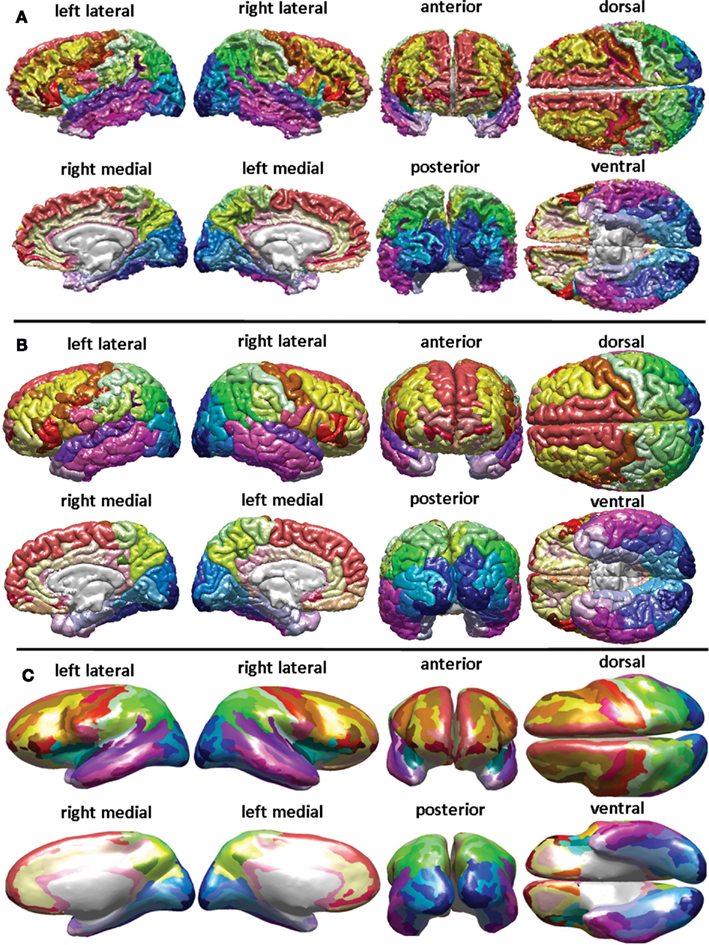
Atlases define regions of the brain based on anatomical, microstructural, functional, or other features

  • Common Atlases
    • MNI

Data modalities

Structural imaging

Measures the anatomy of the brain

  • Derived from T1/T2 MRI scans
  • Structural measures
    • Volume, Cortical thickness, Surface area
  • Data structures
    • Images
    • Regions
    • Gray matter surface
    • Structural-based “similarity” networks

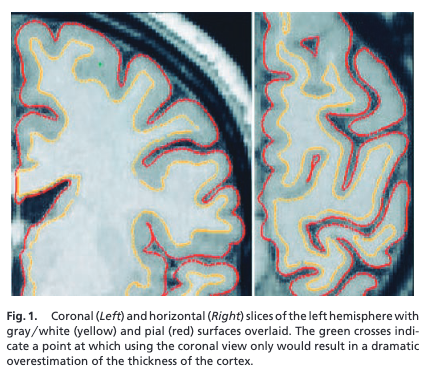
Freesurfer: structural analysis software

  • Cortical surface estimation and analysis
  • Now over 25 years old
  • Many tools now built on analyzing data on the surface

Freesurfer visualization

Functional imaging

Measures brain functioning (inferred by deoxygentated blood)

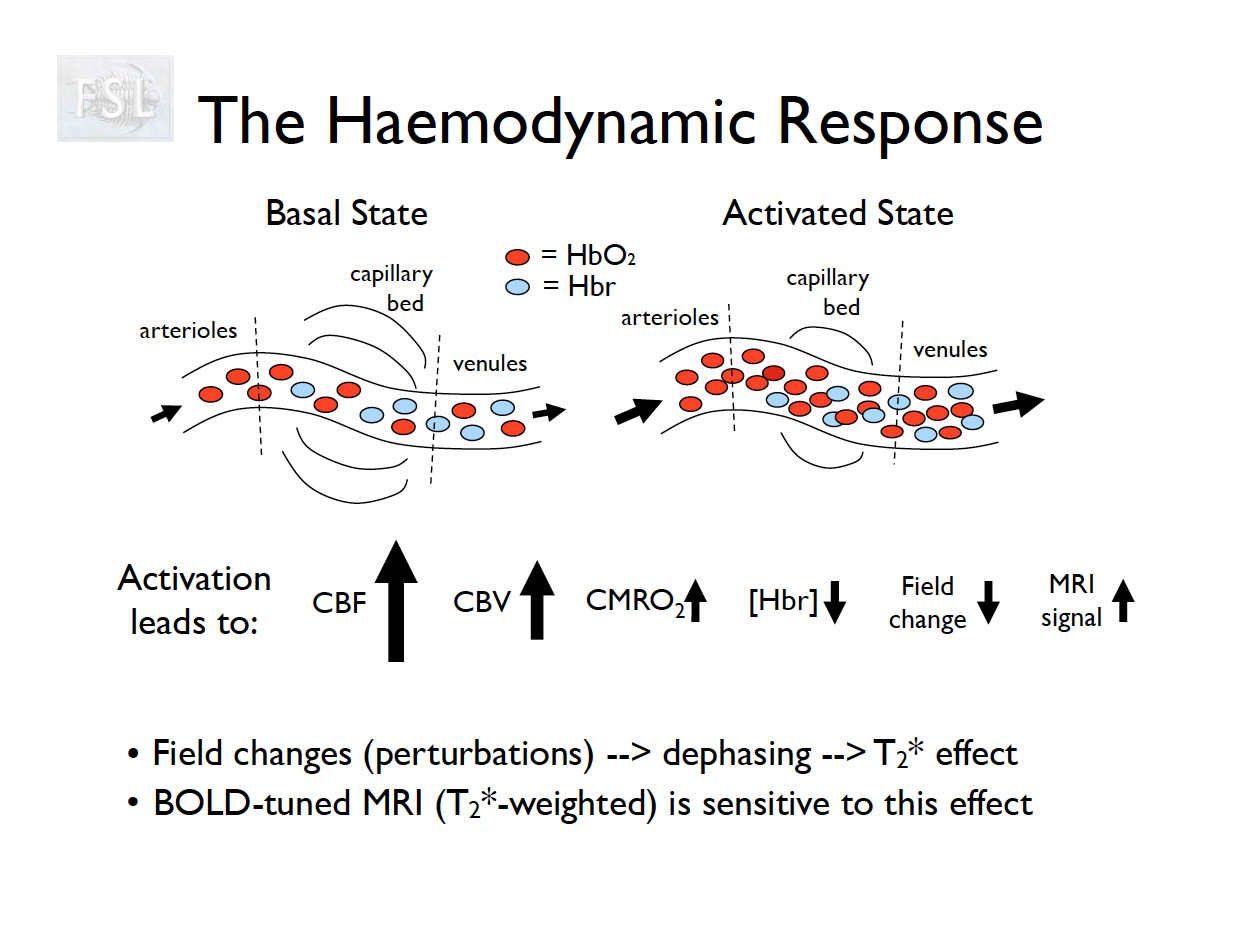
  • Blood oxygen level dependent (BOLD) activity
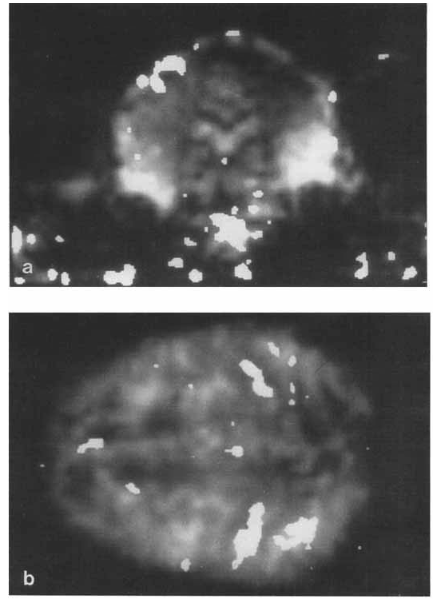
  • History of functional MRI (Bandettini 2012)
  • functional Magnetic Resonance Imaging (fMRI) are time-series data

Early fMRI Bandettini 1991

Types of fMRI data

  • task fMRI – acquired doing a task
  • resting state fMRI (rs-fMRI) – acquired doing nothing

Task fMRI overview

  • Measures brain activity during a task using BOLD signal.
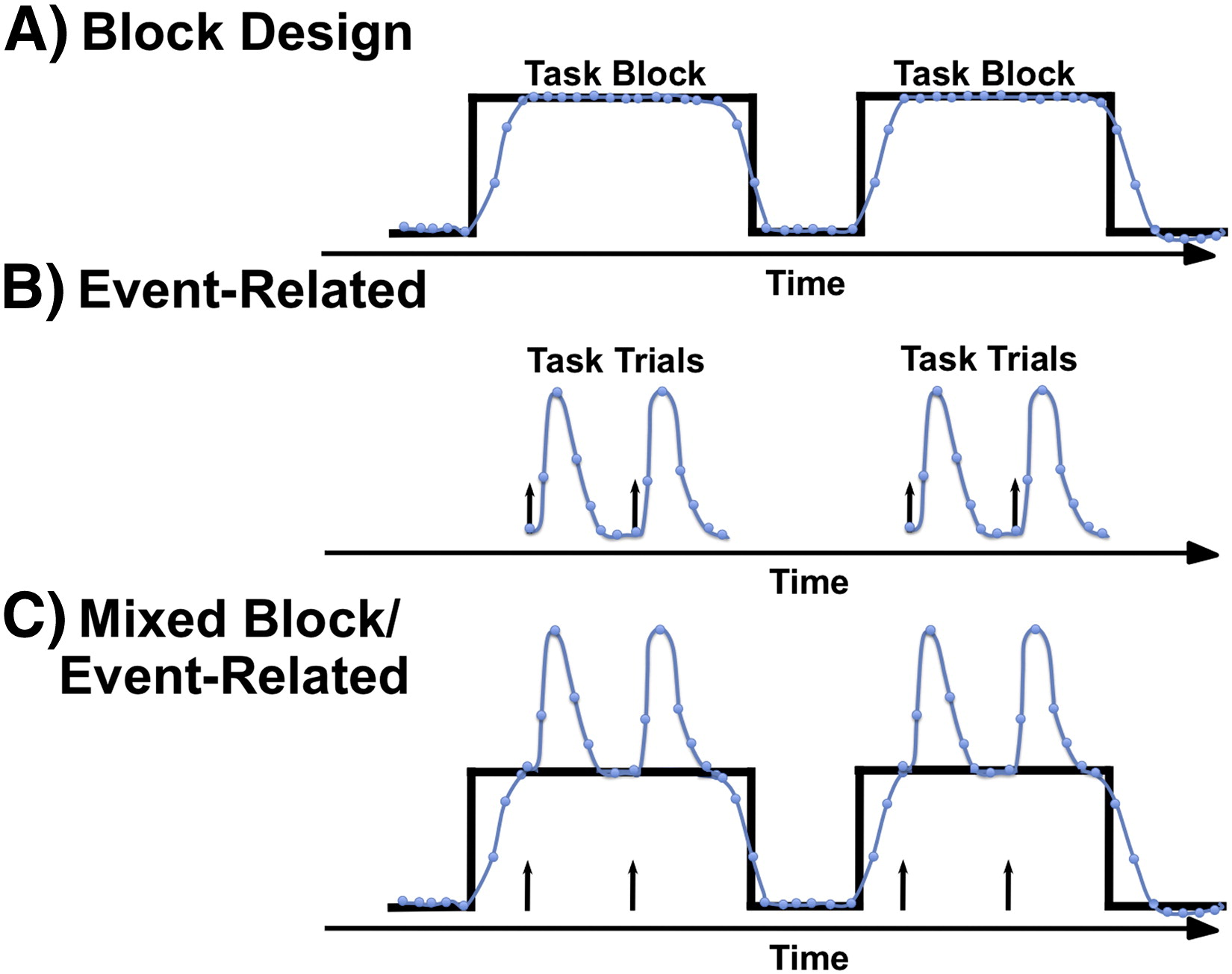
    • Block design: repeated task periods alternating with baseline (e.g. 30s task, 30s rest).
    • Event-related design: timing randomized, short stimuli.
    • Naturalistic: E.g., viewing a movie.
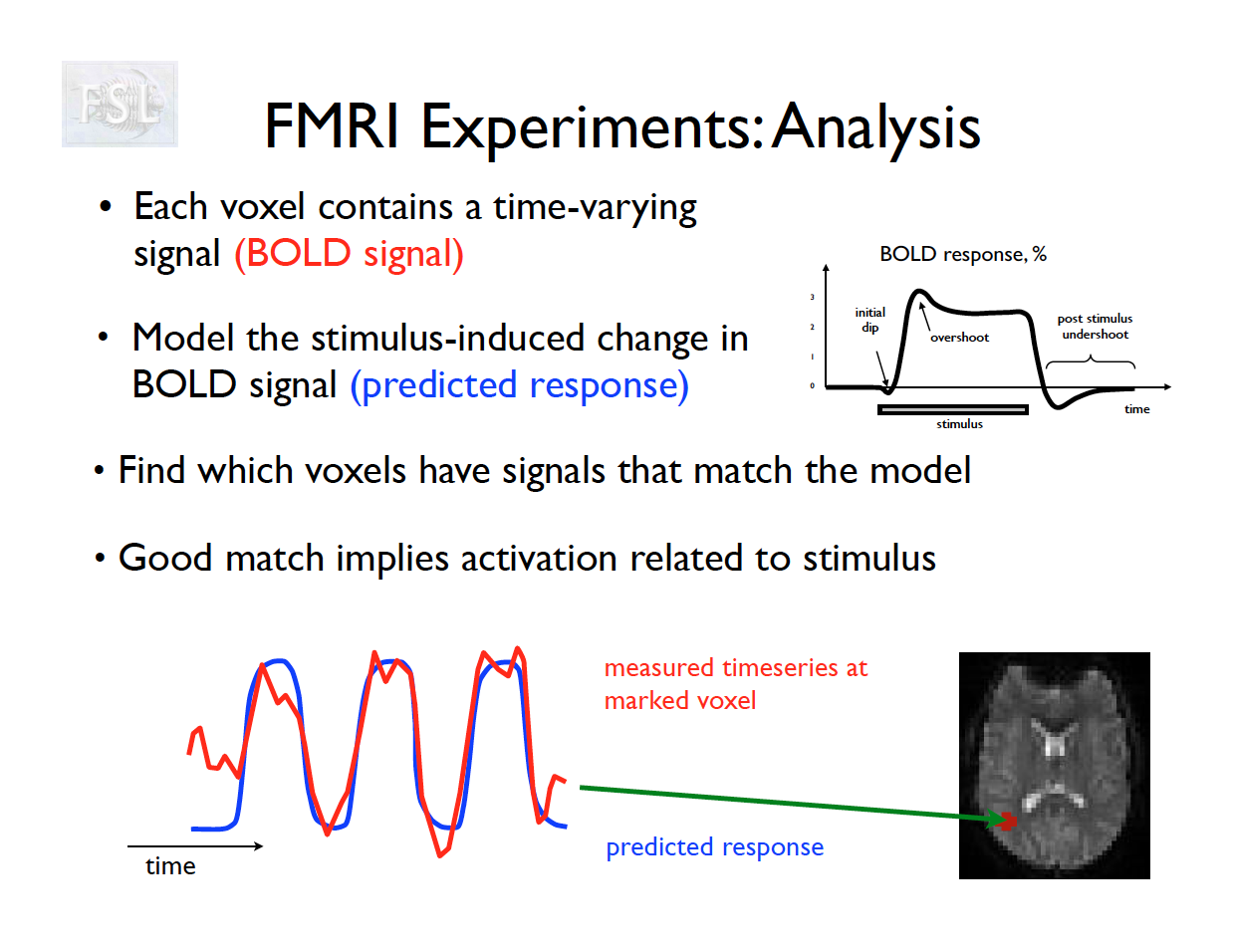
  • Analysis fits a time-series model and compares conditions.
  • Data structures
    • Images, Regions, Gray matter surface

Task fMRI design illustrations

Block versus task designs Petersen & Dubis 2011

Notes on illustration

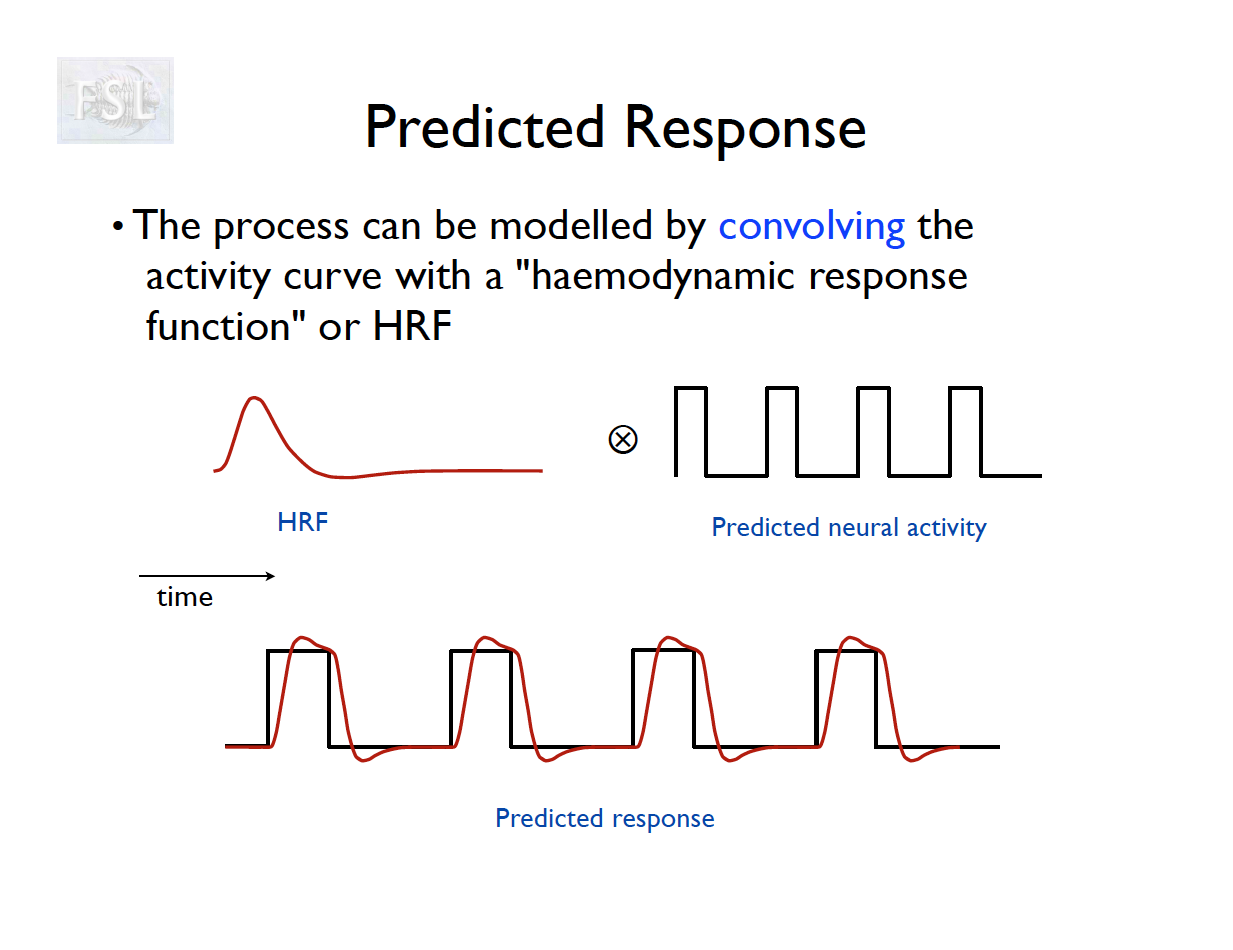
  • Known stimulus time series are convolved with an assumed hemodynamic response function (HRF)
  • HRF is well studied, often assumed, and likely inaccurate for many brain regions REFs
  • Hemodynamic (blood) response to stimuli is slow.
  • fMRI sampled every 1.5-3 seconds or so.
  • RBC fMRI parameters

RBC task data

Despicable Me

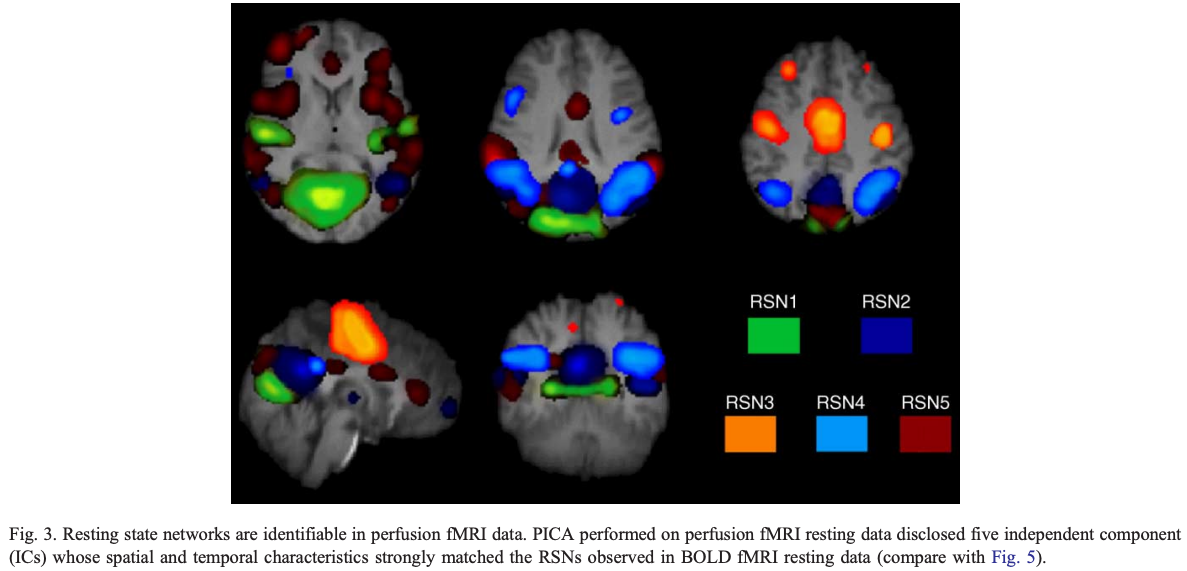
rs-fMRI

  • What it is? Correlation between fMRI time-series in the brain at rest (doing nothing).
  • History: Biswal 1995 first study to do this
  • Now, things are quite a bit more sophisticated
  • Data structures
    • Images
    • Regions
    • Gray matter surface
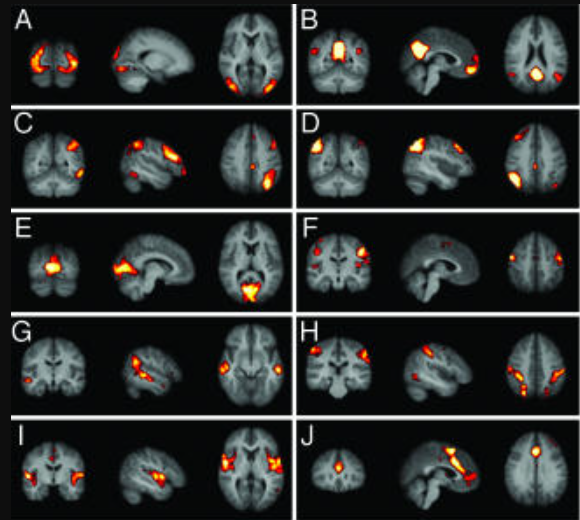
    • Networks

First resting state networks (De Luca)

Published in 2006 using independent components analysis

Early resting state networks De Luca 2006

Resting state networks (Damoiseaux)

Published the same year, using a different ICA method.

Early resting state networks Damoiseaux 2006

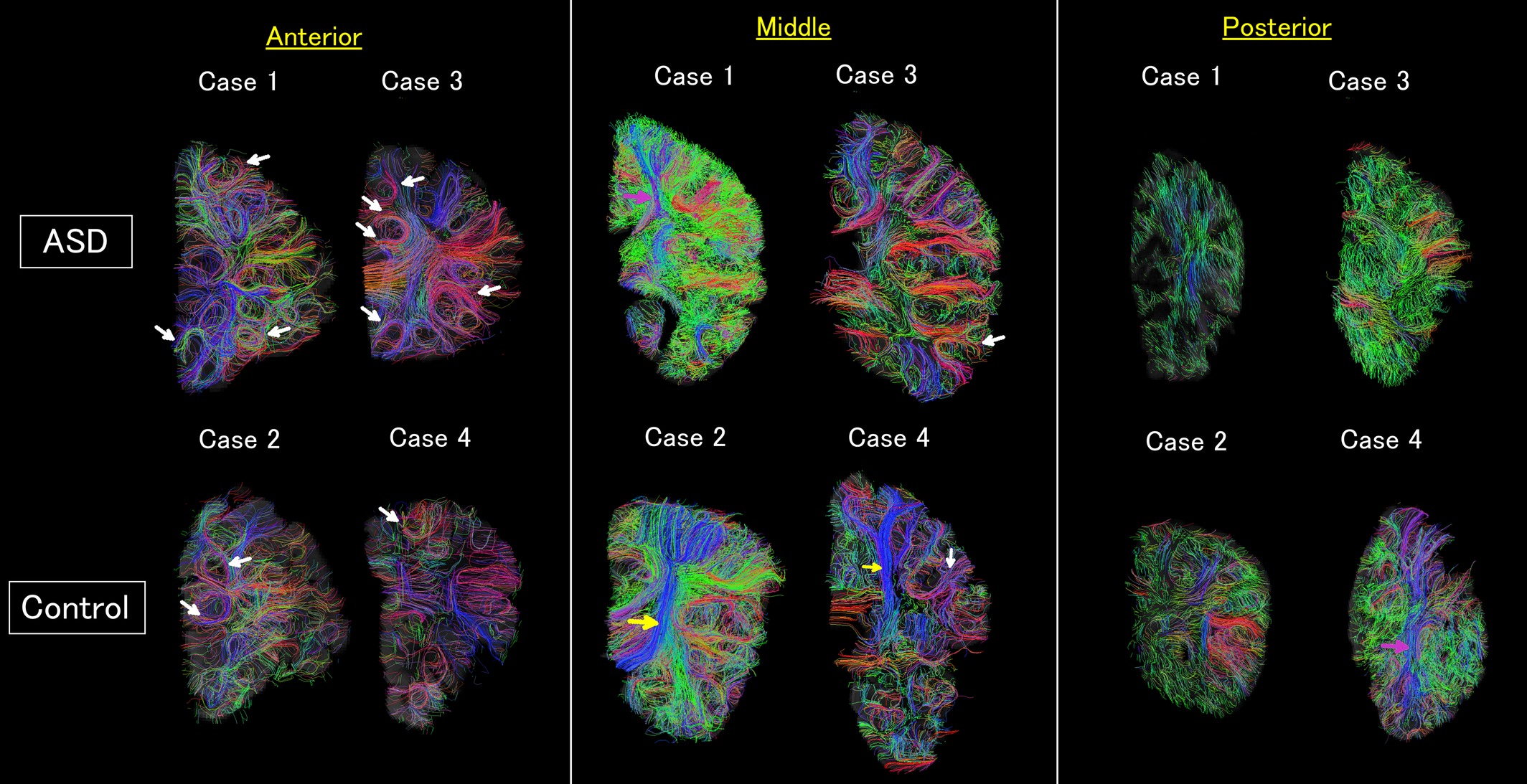
Diffusion imaging

Measures features of water “diffusion” in the brain. Typically, to estimate biological features of the white matter

  • Will not focus on this data type in this course

Diffusion imaging in Autism Wilkinson 2016

Other measures

  • Perfusion – Quantitative measure of blood flow
  • Spectroscopy
  • Many others actively in development
  • Many “derivatives” exist and in development
    • Derivatives are quantitative values derived from existing modalities